The coin in Unfair Flips starts at a flat 20% chance of landing heads, and that number does not move on its own — you have to earn every point of improvement through play. Unfair Flips is built entirely around one absurdly simple goal: get ten heads in a row.
| Genre |
Incremental clicker |
| Platform |
PC |
| Core mechanic |
Flip a weighted coin repeatedly, chasing ten consecutive heads |
The Odds Behind Unfair Flips
At a 20% base chance of heads, the math behind Unfair Flips is brutal: your odds of landing ten in a row from the very first flip sit at roughly one in 9,765,625. Nobody is expected to clear the game on raw luck alone, which is exactly why the upgrade system exists — you spend earnings from successful heads to nudge that base percentage upward over time, chipping away at odds that started nearly impossible.
What makes the loop compelling instead of just punishing is that progress is visible even during a bad run. Every extra flip you land in a row before a tails breaks your streak still earns currency, so a run that “fails” at four heads still moves your upgrades forward incrementally.
Community discussion around Unfair Flips tends to center on streak length as the core bragging metric — players compare their longest run the way other clicker communities compare total currency earned, since a long streak is the one moment where the coin’s odds actually feel like they’re working with you instead of against you.
What the Bear-Masked Figure Is Watching For
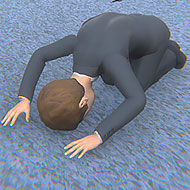
Unfair Flips frames its randomness inside a bleak setting: the year 50,002, humanity long gone, and the only remaining presence a faceless figure wearing a mask of a long-extinct animal, silently observing your flips. It’s a strange, almost unsettling backdrop for a game whose core action is pressing one button, and that mismatch between tone and mechanics is part of what players remember most after finishing it.
Casual players tend to treat the masked observer as pure atmosphere and focus entirely on the flipping loop, while players drawn in by the setting spend more time reading the tutorial and Developer Commentary Mode text than actually flipping. Developer Commentary Mode swaps the standard tutorial for a series of personal essays about the making of the game, and it’s optional — you can ignore it completely and never miss anything the core loop needs.
Reaching Nine Heads and What Happens Next
The tension in the ninth-flip pause is the moment most reviews single out: once you land nine heads in a row, the game visibly shifts its presentation for the deciding flip, acknowledging just how close you are before resolving the outcome. That single flip determines which of several possible endings you get, and not every ending involves actually landing the tenth head — some players report the coin exploding instead, cutting the run short in a very different way.
This is also where the honest criticism of Unfair Flips shows up most clearly. Long, unlucky stretches without a single upgrade-worthy streak are common even after significant playtime, and players have described sessions lasting well over an hour and thousands of individual flips before seeing any ending at all. That’s a deliberate design choice, not a bug, but it’s not for everyone, and the game doesn’t pretend otherwise.
- What are the actual odds of getting ten heads in a row? Starting from the base 20% chance, the probability is about one in 9,765,625, though every upgrade you unlock raises that percentage and shortens the odds for future attempts.
- What happens once you land nine heads in a row? The game pauses on a dramatic beat before resolving your final flip, and depending on the outcome you may land the win, break the streak on tails, or trigger a rarer ending where the coin itself fails in a different way.
- Does Developer Commentary Mode change how the game plays? No — it only replaces the tutorial text with essays about the game’s creation, so turning it on or off has zero effect on your actual odds or upgrades.
Unfair Flips never adds a second mechanic, a second currency type worth worrying about, or a second button to press — it just keeps the bear-masked figure watching while you chase that one impossible streak, one click at a time.