You flick to the West Hall camera, catch Bonnie halfway down the corridor, and switch back just in time to slam the door before she reaches it. That single second of hesitation is what Five Nights In Anime Remastered is built around, and it never really lets you relax once the first night starts moving.
Camera Rotation and Power Drain in Five Nights In Anime Remastered
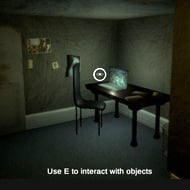
The core loop is simple to describe and hard to master: you sit in the Office with a bank of security cameras, two doors, and a power meter that starts full and never refills on its own. Every camera check, every light flick, and every door you hold shut pulls from the same limited pool, so the game is really asking you to spend a resource wisely rather than just react to jump scares. Checking the Show Stage too often burns power for no reason, while ignoring it lets Bonnie or Chica slip past unnoticed.
New players tend to treat the cameras like a constant feed, flipping through every room on a loop out of nervous habit. That habit is exactly what drains the meter by 4 AM, leaving you with closed doors and no lights when Foxy makes his final run down the West Hall. The better approach is targeted checking, glancing at Dining Area and the hallways in short bursts instead of holding the tablet up the whole time.
By the time you reach the middle of a shift, power management stops being optional. Casual players who came in expecting a straightforward horror romp usually get caught here, because the tension isn’t the jump scare itself, it’s the countdown running underneath everything you do.
Reading Bonnie and Chica Before They Reach the Doors
Bonnie starts on the Show Stage and works her way down the left side of the building, while Chica mirrors that path on the right through the Dining Area toward the East Hall. Learning their timing matters more than reacting fast, since both animatronics telegraph their approach a room or two before they’re actually at your door.
Players who main a defensive style tend to camp on the door buttons and barely touch the cameras once Bonnie and Chica start moving, trading power efficiency for certainty. It works, but it burns through the meter faster than a more measured camera rhythm would.
Foxy’s Sprint Cycle and the Empty Hallway Trick
Foxy behaves differently from the other two. He waits in his corner, and the less you check on him, the more agitated he gets, until he suddenly sprints down the hallway in one uninterrupted motion. The community vocabulary for this is “camera flicking,” a quick glance-away-and-back pattern that resets his patience without costing much power.
Skipping that flick for even one full cycle is the single most common way beginners lose a night early, since Foxy doesn’t give a second warning once he’s already running.
When Freddy and Spring Freddy Start Moving
Freddy is the quiet one for most of a shift, barely shifting position on camera while Bonnie and Chica do all the visible work. Once he does start moving, usually once the earlier animatronics have been dealt with a few times, he’s much harder to track because he only advances while your back is turned or the cameras are down.
Spring Freddy adds a second layer on top of that. He wakes from the Closet at unpredictable moments and teleports directly toward the Office, which means you have to split attention between the hallway threats and whatever’s happening behind you. Aggressive players who love pushing power reserves to the limit often get blindsided here, because Spring Freddy punishes exactly the kind of camera neglect that saves power everywhere else.
This is also where the difficulty curve becomes obvious. Early nights ask you to manage two threats. By the time Spring Freddy is active, you’re tracking closer to six different animatronics across the building, and the margin for error shrinks with every one of them.
The Puppet, the Music Box, and Split Attention
The Puppet sits outside the main hallway loop entirely. Instead of approaching through a door, it escapes from its box if left unchecked, and stopping it means clicking the lid shut the moment you hear the faint humming that signals it’s stirring. That sound cue is the kind of detail only players who’ve actually sat through a full night ever pick up on, since it’s easy to miss under everything else happening on screen.
- Balance the Puppet against Bonnie and Chica’s approach timing rather than treating it as a separate task
- Use the humming cue instead of constantly switching to its camera, which wastes power you need elsewhere
- Prioritize the Puppet during quiet stretches when the hallway animatronics are still far from the doors
Support-minded players who like managing several small systems at once tend to enjoy this stretch of the game the most, since it rewards juggling rather than pure reflexes.
Custom Night and Higher AI Levels
Once the main nights are cleared, Custom Night lets you push each animatronic’s aggression individually, which is where a lot of the divisive discussion around the game comes from. Some players love tuning a lopsided setup that stress-tests one specific mechanic, while others find the mode punishing in a way that feels less like skill and more like luck once several animatronics are maxed out together.
That criticism is fair and worth acknowledging. Early in the game the systems feel readable, but stacking every AI level high at once compresses your reaction windows to the point where even players who’ve mastered the base nights get caught out.
How many animatronics do you need to track in Five Nights In Anime Remastered?
Across a full playthrough you’re managing six animatronics total: Bonnie, Chica, Foxy, Freddy, Spring Freddy, and the Puppet, though not all of them are active from night one. They layer in gradually, which is why the jump in difficulty feels sudden if you haven’t adjusted your camera routine to match.
What’s the fastest way to lose power in Five Nights In Anime Remastered?
Holding a door closed longer than necessary is the biggest drain, followed by leaving the camera tablet up during quiet stretches. Power management works best when you treat both the doors and the cameras as tools you dip into briefly rather than systems you leave running.
Why does Spring Freddy feel harder than the other animatronics?
Spring Freddy doesn’t follow the same hallway path as Bonnie or Chica, so you can’t track him with the same camera rhythm you’ve built up for everyone else. He specifically punishes players who’ve settled into a comfortable checking pattern, which is exactly why he shows up later once that pattern is already formed.
Five Nights In Anime Remastered isn’t really about the jump scares once you’ve sat through a few nights, it’s about whether you can keep Foxy’s camera flick, Bonnie and Chica’s door timing, and the Puppet’s music box all running in your head at once without draining the power meter dry before Spring Freddy even wakes up.