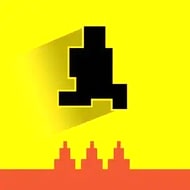
In SuperSorry you start every scenario already at fault, dropped into the middle of a workplace disaster or a family argument with nothing but a set of bowing techniques standing between you and total humiliation, which matters because the whole game is built around digging yourself out rather than avoiding trouble in the first place.
| Genre |
Action and simulation |
| Platform |
PC |
| Core Loop |
Trigger a scenario, perform bowing techniques to de-escalate, progress through office, client, and home settings |
| Player Count |
Single player |
Bowing as the Core Mechanic
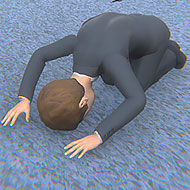
SuperSorry casts the player as a salaryman whose entire skill set boils down to acrobatic bows, and the game treats apologizing less like a passive cutscene and more like a physical action with real technique behind it. Spinning bows and jumping bows aren’t just cosmetic flourishes — different situations call for different bowing styles, and picking the wrong one tends to make an already bad scenario worse rather than resolving it.
This is where SuperSorry earns its reputation as more of an action game than its premise suggests. A boss reprimand doesn’t get solved the same way a client complaint does, and players who button-mash the same bow through every scenario tend to find themselves stuck longer than players who actually pay attention to which technique the moment calls for.
Office, Client Sites, Home, and Public Spaces
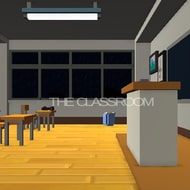
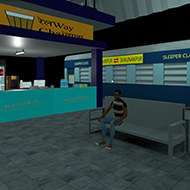
The scenarios in SuperSorry rotate through distinct settings — the office, client sites, home, and public spaces — and each one carries its own flavor of everyday disaster. Office scenarios tend to revolve around a boss reprimand or workplace mishap, client site scenarios escalate around complaints and dissatisfaction, and home scenarios pull family issues into the mix, giving the game a wider emotional range than a typical office comedy.
Public space scenarios are where SuperSorry leans hardest into physical comedy, since the salaryman’s bowing has to contend with crowds, obstacles, and witnesses rather than a single antagonist in a room. Players moving through the game in order tend to notice the scenarios escalate in complexity, with public spaces generally saved for later stages once a player has a firmer grasp on technique timing.
What “Super Dogeza” Actually Means for Players
SuperSorry leans into its own premise hard enough that the game refers to its protagonist’s ultimate apology as achieving Super Dogeza — the deepest, most exaggerated form of the traditional Japanese bow of apology, played entirely straight-faced despite how absurd it looks in motion. Landing a Super Dogeza at the right moment in a scenario is treated as the closest thing SuperSorry has to a triumphant finishing move.
Community reception around SuperSorry has been mostly positive, with a majority of reviewers responding well to the comedic tone, though not every player connects with the game’s specific brand of humor — the repeated joke of apologizing your way out of everything wears thinner for some than others, and that split shows up regularly in player discussion.
Where New Players Usually Struggle
Early scenarios in SuperSorry are forgiving about timing, letting players learn the difference between a spinning bow and a jumping bow without much penalty for guessing wrong. That forgiveness disappears fast once client site and public space scenarios kick in, where a mistimed bow doesn’t just fail to resolve the situation — it can actively escalate it, dragging out a scenario that should have ended in seconds.
How do you know which bowing technique fits a given scenario in SuperSorry? Players who’ve spent time with the game generally point to visual and contextual cues — a furious boss calls for something more restrained, while a flustered client site disaster tends to respond better to the more theatrical spinning bow. Is SuperSorry more comedy or more action? It’s genuinely both, and that combination is exactly why the pacing feels different from a straightforward apology-themed comedy game.
SuperSorry commits fully to its premise in a way that keeps it from feeling like a one-joke idea stretched too thin — every acrobatic bow, every escalating client complaint, and every trip back to the office to face another reprimand adds up to a game that takes its own absurd logic seriously. Whatever shocking ending a player eventually reaches, it’s the spinning bow through the middle of it all that makes SuperSorry memorable.