You light the stove under Ramu’s stall, listen for the pan to start humming, and start portioning tea leaves before the next train even shows up on the board. That’s usually how a session of Railway Chai Wala opens, hands busy first, explanations later.
| Genre |
Psychological thriller, cooking simulation |
| Setting |
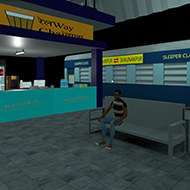
Fakripur railway station |
| Playable Character |
Ramu, the station chaiwala |
| Core Loop |
Brew chai, fry samosas, sell Kokila Cola, notice what’s wrong |
Ramu’s Stall and the Rhythm of Fakripur Station
The opening stretch of the game is deliberately mundane, and that’s the point. You’re running Ramu’s little stand at Fakripur, and your job is to keep passengers fed and caffeinated before their trains pull out. Milk goes on the burner, leaves steep, cups get poured, and a samosa or two gets flipped in the pan while you half-listen to platform announcements in the background. None of this is difficult on its own, but the game asks you to juggle three or four small tasks at once, and that’s where the tension quietly starts building.
- Boil and season the chai before it over-brews
- Fry samosas without burning the batch
- Hand out bottles of Kokila Cola to thirsty travelers
- Keep an eye on which passengers are actually regulars
Players who treat the early minutes as filler tend to miss small details planted right in front of them. A face that shows up twice. A voice on the announcement system that sounds slightly off. The game never highlights these moments, so people who rush through the serving loop just to “get to the good part” often have to replay sections later to catch what they skipped.
Where Railway Chai Wala Stops Feeling Like a Cooking Game
Somewhere past the first handful of orders, the tone shifts. It’s not a jump scare or a loud sting, more like the sense that Fakripur station isn’t quite as busy or as ordinary as it first appeared. Reviewers on Steam have compared the pacing to the grounded, everyday-horror approach used in the Fears to Fathom series, where dread builds through repetition rather than spectacle, and that comparison holds up well here. The station keeps functioning normally on the surface while something underneath it clearly isn’t.
This is also where the word “game” starts to feel almost too casual for what’s happening, because by this point you’re not just managing a tea stall, you’re piecing together why certain passengers keep returning and why the trains never seem to actually arrive on time. The shift is gradual enough that players often can’t pinpoint the exact moment things turned, which is one of the more talked-about strengths of the writing.
Community discussion around Railway Chai Wala tends to focus heavily on this transition, since it’s the part people bring up first when recommending it to friends.
Serving Passengers Without Missing a Beat
Beginners consistently make the same mistake: they treat orders like a checklist instead of watching the passengers themselves. Advanced players learn to glance at expressions and posture, not just order tickets, because certain reactions hint at what to expect later. Players who enjoy narrative-driven exploration tend to slow down and study every prop on the counter, while players chasing efficiency blitz through orders and end up missing dialogue triggers entirely.
Difficulty here isn’t about reflexes ramping up. It’s about attention. Early on, mistakes just mean a wasted samosa or a lukewarm cup of chai. By the time you’re deep into the story, small slip-ups start affecting how scenes play out, so the margin for careless multitasking narrows without ever being stated outright.
What Railway Chai Wala Doesn’t Explain Up Front
One thing players openly disagree on is the runtime. Some argue the short length is exactly right, tight enough that nothing overstays its welcome. Others wanted more of Fakripur station once the story hooked them, and felt the ending arrived faster than the buildup deserved. Both reactions show up constantly in reviews, and neither one is really wrong.
Once the loudspeaker announcement starts repeating a line it shouldn’t, most players know exactly what point of the game they’ve reached, since that specific audio cue has become a shorthand reference in community discussions. It’s a small detail, but it’s the kind of thing you only notice if you’ve actually sat through a full playthrough rather than watched a summary.
How long does it take to finish Railway Chai Wala?
Most players clear a full run in a single sitting, since the pacing is built around staying tight rather than padded. The exact length depends on how thoroughly you inspect the stall and the passengers, but it’s short enough to finish in one evening.
Is Railway Chai Wala actually scary or mostly about tea brewing?
It starts almost entirely as a tea-and-samosa simulation, then leans into psychological horror once the Fakripur station setting reveals its second layer. The scares are quiet and situational rather than jump-scare heavy, closer to slow-burn dread than a horror game built around loud stings.
What happens if you serve the wrong order to a passenger?
Serving mistakes early on are mostly harmless, just an annoyed customer or a wasted ingredient. Later in the game, getting an order wrong to specific recurring passengers can change how a conversation unfolds, which is part of why observant players get more out of the ending.
Railway Chai Wala works precisely because it never lets go of Ramu’s stall as its anchor, so even when Fakripur station stops making sense, the simple act of pouring a cup of chai still feels like something you understand.