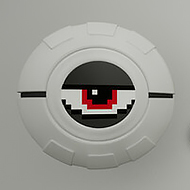
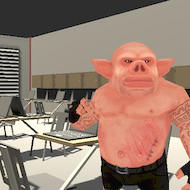
In Family Secrets 1: Empty Plate you start with a phone ringing and your mother’s voice on the other end telling you she has to leave for work for several days, and that one call decides everything else that happens in the house that night.
Miko’s Responsibilities in Family Secrets 1: Empty Plate
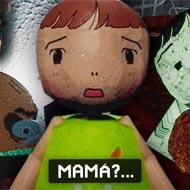
You play as Miko, an older sibling suddenly responsible for looking after his younger sibling, Jun, with no adult left in the house to fall back on. The game never frames Miko as a hero or a trained investigator — he’s a kid handed a task too big for him, and that imbalance is the emotional center of the entire game rather than a detail in the background.
What players get wrong going in is expecting a jump-scare-driven monster story. Family Secrets 1: Empty Plate doesn’t announce its genre early; the first stretch plays almost boringly normal, with dinner, chores, and Jun’s voice from another room standing in for anything overtly frightening. The shift in tone, once it arrives, catches most first-time players off guard specifically because they weren’t braced for it.
There’s no character creation screen, no class to pick, and no major branching decisions to weigh. Instead, the game keeps its focus narrow: one house, one night, and a responsibility Miko never asked for. Players who go in expecting a large cast or multiple story routes tend to be surprised by how tightly the game holds to just these two siblings.
The Flashlight and the Home’s Dark Corners
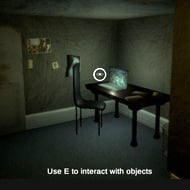
Controls stay simple by design. WASD handles movement through the house, E interacts with objects and skips or advances dialogue, F toggles the flashlight, and ESC pauses or resumes the session. The flashlight isn’t a minor utility item here — several of the best moments are visual rather than audio cues, and a player who leaves a dark corner unlit can miss them entirely.
By the time you check the kitchen early on, don’t rush past it. The empty plate sitting there, along with a couple of small details nearby, sets up context that pays off much later even though nothing about the scene feels urgent in the moment.
Once the flashlight becomes essential, exploration starts to feel less like a checklist and more like a habit you have to build on the fly. A player who instinctively lights every room, even ones that look uneventful at first glance, tends to notice small changes — a moved object, a door left slightly open — that a faster player skips right past.
Sound Design and Playing With Headphones
Family Secrets 1: Empty Plate leans hard on ambient house sound rather than a traditional score. Footsteps on different surfaces, doors creaking open in another room, and Jun’s voice calling from down the hallway all carry information the player needs, and a lot of that detail simply doesn’t come through on laptop speakers. Players who’ve finished the game consistently recommend headphones for a first playthrough, since the sound design is doing quiet narrative work that visuals alone don’t cover.
This is also where the claymation-inspired art style earns its keep. The soft, almost cozy visual texture makes the early domestic scenes feel warmer than a typical horror game, which makes the eventual tonal shift land harder by contrast. It’s a deliberate mismatch between how the game looks and what it’s actually building toward.
The Hide-and-Seek Scene and What It Signals
One sequence in particular — a hide-and-seek moment between Miko and Jun — has become the game’s most-clipped scene across TikTok and Twitch, largely because of an unexpected reveal partway through it. It’s a good example of how the horror in this game rarely comes from a jump scare; it comes from a familiar childhood activity turning quietly wrong.
Players consistently describe the experience with the same community shorthand: a “babysitting horror” game, distinct from monster-chase titles because the tension is domestic rather than supernatural in origin. Streamers in particular tend to react most strongly to this scene specifically because nothing in the pacing beforehand telegraphs it — the hide-and-seek setup reads as a break from tension right up until it isn’t.
A more observant player who paid attention to the kitchen and the empty plate earlier tends to read this scene differently than someone who skipped ahead, since several of the environmental details from earlier rooms quietly recontextualize what’s happening once Jun goes missing mid-round.
What Family Secrets 1: Empty Plate Leaves Unexplained
The game runs roughly 30 to 40 minutes from start to finish, and that compact length is a deliberate choice rather than a shortcoming — it stays focused on one house and one situation instead of spreading across multiple locations. Some players find this restraint satisfying, while others openly wish the story lingered longer on Jun and Miko before the ending arrives, which remains one of the more debated points in community discussion.
Because there’s no chapter select or explicit lore dump, a lot of what the player understands about the family situation comes from inference rather than direct exposition. This ambiguity is intentional, but it’s also part of why online discussion around the game tends to split into competing theories about what exactly happened before Miko’s mother left, and what the ending is actually implying.
A handful of players have also run into a bug where a cutscene or piece of on-screen text appears to freeze. Waiting a few seconds before restarting the scene usually resolves it rather than requiring a full relaunch, and this is a known rough edge the community has more or less learned to work around.
Family Secrets 1: Empty Plate never needed a bigger cast or a longer runtime to land its point — it just needed one quiet plate left on the counter, a flashlight beam in the wrong corner, and Jun’s voice from another room to turn an ordinary babysitting night into something nobody who’s played it forgets easily.